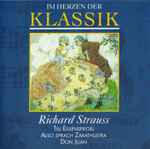
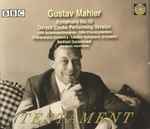
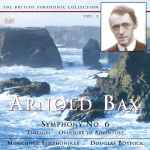
Post-Romanticclassical music represents the twilight of the Romantic era, spanning roughly from the 1890s through the early 20th century, where composers pushed emotional expression and orchestral color to their apex before modernism's radical break. This music is characterized by expanded harmonic language that stretched tonality to its breaking point, vast orchestral forces creating unprecedented sonic richness, and an almost desperate intensification of feeling—whether Mahler's cosmic symphonies grappling with mortality, Strauss's opulent tone poems and operas, or Sibelius's austere Nordic landscapes. Where classical Romanticism expressed passion within established forms, post-Romantic works exploded those boundaries with massive durations, chromatic saturation, and psychological depth that bordered on the expressionistic.
What distinguishes post-Romantic from its neighbors is its threshold position: unlike contemporary classical's embrace of atonality and experimental techniques, post-Romantic composers like Dvořák, Glazunov, and Bax remained fundamentally committed to tonality even while bending it toward collapse. It occupies a richer, more emotionally maximalist space than the restrained structures of earlier classical periods, yet maintains narrative and harmonic coherence that ambient music abandons. These works represent the last grand flowering of 19th-century orchestral tradition before Schoenberg's revolution—making them simultaneously nostalgic monuments and forward-looking experiments.
For listeners, post-Romantic music offers unparalleled emotional catharsis and orchestral splendor—the sheer sonic beauty of late Strauss, the tragic grandeur of Mahler's symphonies, the nationalistic passion of Sibelius. This is where classical music reached its most intoxicating extremes before the 20th century changed everything.